Basilica of St. John, St John Basilica Ephesus, Ayasuluk Hill, Ephesus pilgrimage, Apostle John tomb, Selcuk basilica
Basilica of St. John Ephesus – Complete Visitor Guide 2026
January 01, 2026
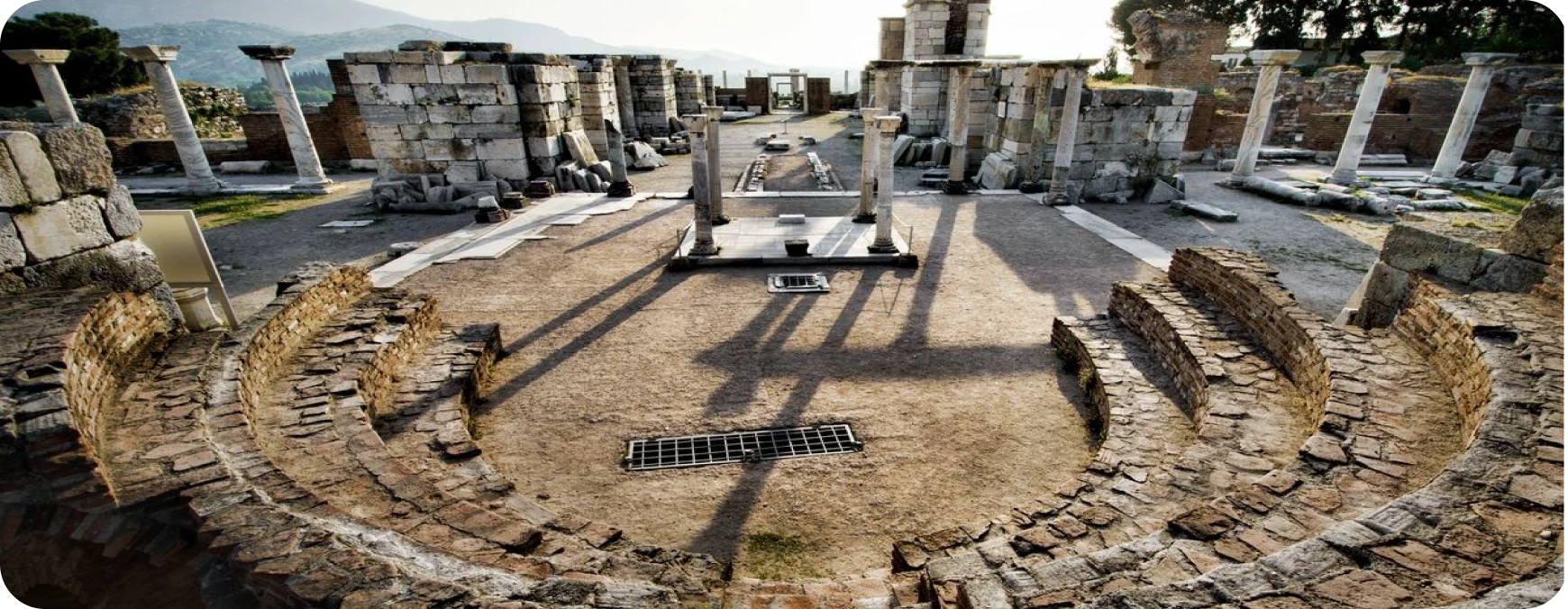
The Basilica of St. John was built by Emperor Justinian in the 6th century on Ayasuluk Hill in Selcuk, marking the traditional burial place of John the Apostle. One of the largest Byzantine churches ever built, it was a major pilgrimage destination. This guide covers history, architecture, the tomb of St. John, and visiting tips for 2026.
Basilica of St. John Ephesus – Pilgrimage Site on Ayasuluk Hill
The Basilica of St. John (Aziz Yahya Kilisesi in Turkish) stands on Ayasuluk Hill in Selcuk, approximately 3.5 km from the ancient city of Ephesus. Built by Emperor Justinian I in the 6th century AD, it was one of the largest and most magnificent Byzantine churches ever constructed—designed to honour the traditional burial place of John the Apostle, who is believed to have spent his final years in Ephesus and to have written the Gospel of John and the Book of Revelation there. The basilica became one of the most important Christian pilgrimage destinations in the medieval world. Today, its impressive ruins—partially reconstructed—offer visitors a glimpse into Byzantine architecture and the sacred history of early Christianity in Asia Minor. This comprehensive guide covers the basilica's history, architecture, the tomb of St. John, and practical visiting information for 2026.
History of the Basilica of St. John
According to Christian tradition, John the Apostle came to Ephesus with the Virgin Mary after the death of Christ and spent his final years there. He is said to have been buried on Ayasuluk Hill (then known as Ayasuluk or Hagios Theologos). The site was first marked by a simple memorial in the 2nd century. In the 4th century, a small church was built over the grave. This church was damaged by earthquakes in the 6th century. Emperor Justinian I (527–565) ordered the construction of a magnificent new basilica to replace it. Work began in 535 or 536 and was completed by 565. The project was overseen by Hypatius of Ephesus, the leading ecclesiastical figure of the time. The new basilica was modelled after the Church of the Holy Apostles in Constantinople—a cruciform plan with multiple domes. The basilica flourished as a pilgrimage centre for centuries. However, Ephesus declined after the harbour silted up and Arab raids increased. The Seljuk Aydinoglu clan converted the basilica into a mosque in 1330. In 1402, Tamerlane's Mongol army completely destroyed the structure. The ruins were later pillaged for building materials. Excavations and partial reconstruction began in the 20th century; today the site is part of the UNESCO World Heritage listing for Ephesus.
Architecture and Design
The Basilica of St. John was a domed cruciform structure—one of the largest churches of its time. If fully reconstructed, it would rank as the seventh largest cathedral in the world. The building featured six massive domes arranged in a cross plan. It was constructed with brick foundations and marble walls. The entrance was through a large western courtyard (atrium), followed by a narthex (entrance hall) and then the main nave. The nave was divided by columns and led to the central sanctuary, where the tomb of St. John lay beneath the main dome. The capitals of the columns bore the monograms of Justinian and his wife Theodora. Recent excavations have revealed a baptistery with a central pool and an attached chapel decorated with frescoes of saints. The basilica's scale and grandeur reflected both imperial patronage and the importance of Ephesus as a Christian centre.
The Tomb of St. John
The sacred burial place of John the Apostle was located beneath the central dome of the basilica. Pilgrims believed that a fine dust (manna) emanated from the tomb, which was collected and used for healing. The tomb's presence made the basilica one of the most revered pilgrimage destinations in the medieval Christian world—comparable to the Holy Sepulchre in Jerusalem or the tomb of St. Peter in Rome. Today, the site of the tomb is marked within the ruins; visitors can see the crypt area where John was traditionally believed to rest.
Gate of Persecution and Other Features
The main entrance to the basilica was through the Gate of Persecution (İstasyon Kapısı)—the best-preserved part of the structure. The gate derives its name from a relief depicting scenes of persecution, possibly of early Christians. Other surviving elements include the outline of the nave, the bases of columns, sections of the marble walls, and the baptistery. The basilica sits alongside the fortress of Selcuk (Ayasuluk Castle) and the İsa Bey Mosque—a 14th-century Seljuk mosque built with materials from the Ephesus ruins. Together, these monuments form a rich historical landscape on Ayasuluk Hill.
Location and How to Visit
The Basilica of St. John is located on Ayasuluk Hill in the centre of Selcuk, within walking distance of the town's bus station, the Ephesus Museum, and the İsa Bey Mosque. It is approximately 3.5 km from the ancient city of Ephesus. Many visitors combine a morning at Ephesus with an afternoon visit to the basilica, the museum, and the Temple of Artemis. The site requires a separate entrance ticket from the Ephesus archaeological site. Opening hours: April–October 08:00–21:30; November–March 08:00–17:00. Allow 30–45 minutes to explore the ruins. The Turkey Museum Pass is valid for the basilica.
Why Visit the Basilica of St. John?
The basilica is essential for anyone interested in early Christianity and Byzantine architecture. It connects the apostolic age—John's ministry in Ephesus—with the imperial Christianity of Justinian's reign. The scale of the ruins is impressive even in their partial state. Combined with Ephesus, the House of Virgin Mary, and the Ephesus Museum, the basilica completes the picture of Ephesus as a cradle of both pagan and Christian civilisation.
Practical Visiting Tips
- Combine with nearby sites: The basilica, İsa Bey Mosque, Ayasuluk Castle, and Ephesus Museum are all within easy reach in Selcuk.
- Wear comfortable shoes: The site is uneven; the hill offers views over Selcuk and the surrounding countryside.
- Morning or late afternoon: The hill can be hot in summer; early or late visits are more comfortable.

Related content
Benzer sayfalar