Terrace Houses Ephesus, Yamaç Evleri, Ephesus Terrace Houses, houses of the rich Ephesus, Ephesus mosaics, Ephesus frescoes
Terrace Houses Ephesus – Complete Guide to Yamaç Evleri 2026
February 19, 2026
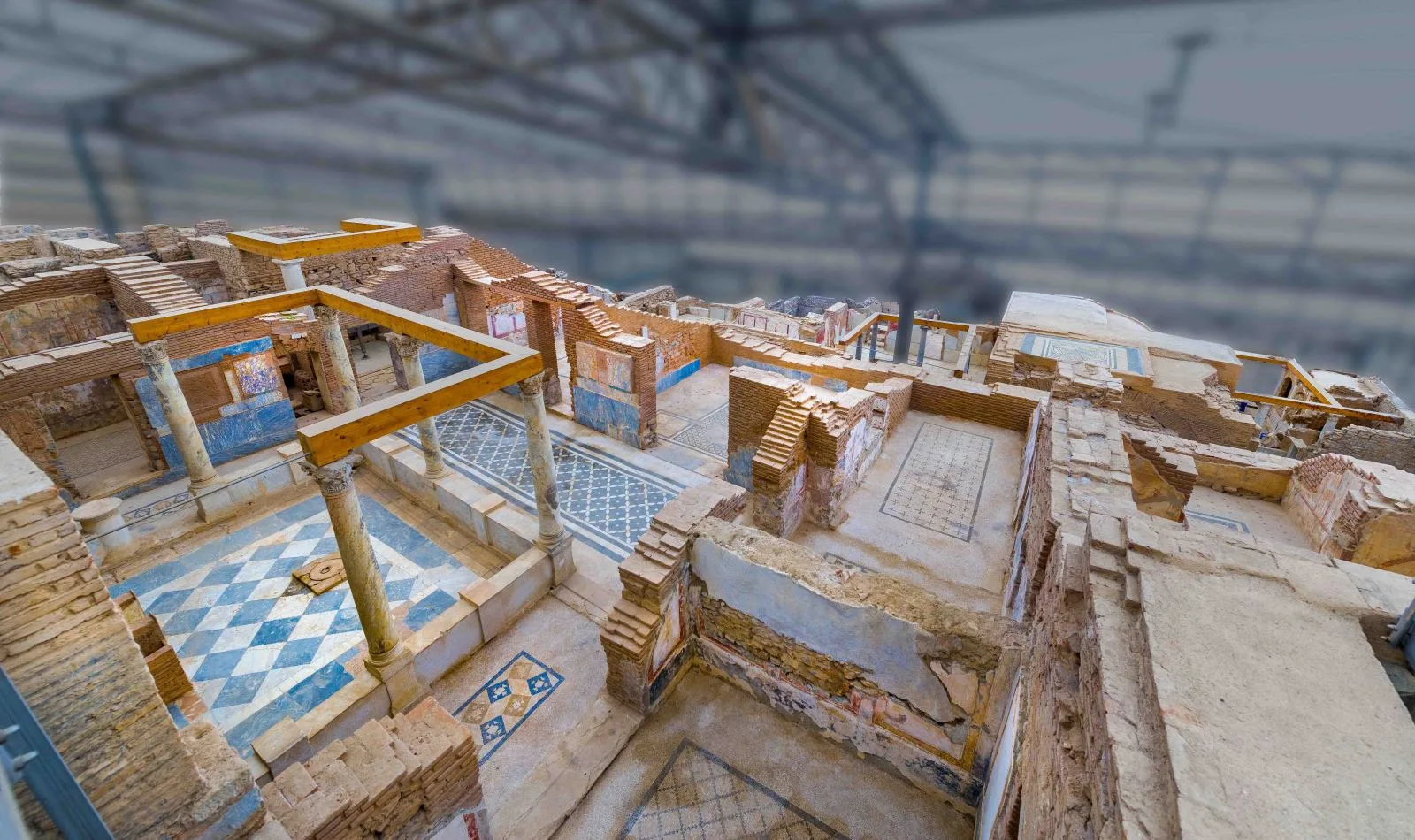
The Terrace Houses of Ephesus (Yamaç Evleri) are luxury Roman residences built into the slopes of Bulbul Mountain. Discover frescoes, mosaics, marble halls, and underfloor heating systems that reveal how Ephesus's elite lived in antiquity. This guide covers history, architecture, visiting tips, and how to combine your visit with the main Ephesus site.
Terrace Houses Ephesus – The Houses of the Rich
The Terrace Houses of Ephesus (Yamaç Evleri in Turkish, meaning «Slope Houses») are among the most remarkable archaeological discoveries in the ancient Mediterranean. Built into the northern slope of Bulbul Mountain (Bülbüldağ), directly behind the Library of Celsus along Curetes Street, these six luxury residences offer an unparalleled glimpse into how Ephesus's elite—wealthy merchants, magistrates, and priests—lived in Roman and Byzantine times. Unlike the public ruins of the main Ephesus site, the Terrace Houses reveal the private world of domestic life: frescoes, mosaics, marble halls, running water, and underfloor heating. This comprehensive guide covers history, architecture, what to see, and practical visiting information for 2026.
History of the Terrace Houses
Construction of the Terrace Houses began around the 1st century BC and continued through the 7th century AD. The houses were occupied for nearly 800 years, evolving through Roman imperial rule and into the Byzantine period. Residents abandoned them in the 7th century AD, when devastating Arab raids and harbour silting forced the population of Ephesus to relocate to Ayasuluk Hill (modern Selcuk). The soil burial that followed preserved the structures exceptionally well—walls, frescoes, mosaics, and even graffiti survived in remarkable condition. Archaeologists from the Austrian Archaeological Institute have been excavating the site since 1960, and work continues today. Two houses have been fully restored and are open to the public; others remain under protective shelters during ongoing excavation.
Architecture and Design
The Terrace Houses were built using the Hippodamian grid style, a popular Roman urban planning method. Each house featured a central atrium—a courtyard measuring 25–50 square metres without a ceiling—to allow natural light and collect rainwater for household use. Smaller rooms called «cubicula» (bedrooms, offices, libraries, dining rooms) surrounded the atrium. Ground floors often contained shops where owners conducted business; upper floors held the residential quarters. The houses were equipped with running water supplied through clay pipes and underfloor heating (hypocaust) systems—a luxury that demonstrated the wealth of their inhabitants. The structures were built on terraces across the mountain slope, creating a multi-level layout that maximised views and ventilation.
Frescoes and Mosaics
The decorative programmes of the Terrace Houses are among the finest surviving examples of Roman domestic art. The walls were adorned with frescoes depicting theatrical scenes from tragedies by Euripides, mythological figures such as Hercules and Achilles, and philosophical themes—including portraits of Socrates and the Muse Urania, now displayed in the Ephesus Archaeological Museum in Selcuk. Other frescoes show gladiators, animals, caricatures, declarations of love, and poems. The floors featured black-and-white and coloured mosaics, marble inlays, and in one residence a stunning 5th-century glass mosaic portraying the heads of Dionysus and Ariadne. Another house features a pedestal mosaic of a Nereid riding a seahorse. These artworks reflect the wealth and cultural sophistication of Ephesus's upper class.
Notable Rooms and Features
Dwelling Unit 6 is particularly notable. It includes a peristyle courtyard, a marble hall that served as a large dining room greatly ornamented with various marble types, a basilica, and a bath complex. Over 75 rooms across the excavated houses showcase painted walls. The «Theatre Room» displays frescoes of theatrical scenes. Inner courts and corridors reveal the daily life of wealthy Ephesians—from dining and entertainment to business and religious practices. The site is entirely roofed, protecting visitors from the sun and making it comfortable to explore even in summer.
Terrace Houses Opening Hours and Tickets
The Terrace Houses have slightly different hours and close earlier than the main Ephesus site. From April to October, they are open 08:00–18:30; from November to March, 08:00–16:30. Admission requires a separate add-on ticket—approximately €15 per person—not included in the standard Ephesus entrance fee. Combined tickets (Ephesus + Terrace Houses) are available at the gate and may offer a small discount. Allow 45–60 minutes for a thorough visit. The walkways are steep and narrow in places; wear comfortable, sturdy shoes.
How to Visit the Terrace Houses
The Terrace Houses are located on the northern side of Curetes Street, behind the Library of Celsus. You enter from within the main Ephesus archaeological site—there is no separate entrance. If you arrive at Ephesus from the lower gate, you will walk past the Library of Celsus and find the Terrace Houses entrance on your left. If you enter from the upper gate, you will reach them after walking Curetes Street. The houses are fully covered, so you can visit even in hot weather. Plan to visit early in the morning to avoid crowds and to have enough time for both the main site and the Terrace Houses.
Why Visit the Terrace Houses?
Many visitors consider the Terrace Houses the highlight of Ephesus. While the main site shows public buildings—temples, libraries, theatres—the Terrace Houses reveal the private world of domestic life. The preserved frescoes, mosaics, and architectural details offer a unique insight into Roman and Byzantine upper-class living. The ongoing excavations mean you may see archaeologists at work and fresh discoveries. If you have limited time, prioritise the main site and the Library of Celsus, but if you can spare 45–60 minutes, the Terrace Houses are well worth the extra ticket.
Practical Tips for Visiting
- Go early: Arrive when the houses open to avoid crowds and to combine with the main site before midday heat.
- Wear comfortable shoes: The walkways are steep and narrow; single-file passages require careful footing.
- Carry water: Although the site is covered, Ephesus can be hot; stay hydrated.
- Buy the combined ticket: If you plan to visit both Ephesus and the Terrace Houses, the combined ticket at the gate is usually the best value.
- Allow 45–60 minutes: Rushing through the houses means missing details—take your time.

Related content
Benzer sayfalar